Tampilkan postingan dengan label Writing. Tampilkan semua postingan

Senin, 15 Agustus 2016

William Baziotes — The Process of Creation


Evolution is the way a poem happens for me. I don't know what the poem is about until I'm finished writing. The poem evolves as I write. I know there are writers who outline everything they do. They know what they are going to write every step of the way. For me, it does not work. I like not knowing. The excitement is in the writing. The same thing happens when I write a story or a novel. Only at the end do I know what I was writing about.  And even then I might not be sure.


When I travel I am the same way. I want to discover new places. My wife and I once were on a trip with another couple. They had everything planned down to the minute and became upset if we deviated from the plan because it put them behind schedule. I can't travel that way. The joy is in the discovery.


Art for me is also about discovery.  When I draw a mask, I never know what a mask will look like until I am finished.  The joy is in the process of creation. The joy is in not knowing where you are going. 


Zentangle 2016


I have been studying Zentangle, a meditative art form, for the last four years.  A basic principle of Zentangle art is that you don't plan your work.  The fun is in the exploration — of discovering where you should go.

One of the things I have learned over the years is that creative leaders have many different ways of working. What works for one person does not work for another. How do you work? Do you map out your story in advance of writing it? Do you know what your painting will look like before you start painting it? Are you confined by the expectations of yourself or others?


Senin, 08 Agustus 2016

Harley King - Heroes and Stories


Are you the hero of your story? Or are you the victim? We all have faced challenges in our lives and we have struggled to overcome difficulties. We have people who seek to hurt us and cause us harm. Have you found the strength to share your story of triumph and victory over the pain? Or are you still dwelling in a past of unhappiness? Maybe it is time to retell your story with you as the hero. Maybe it is time to celebrate your healing.


Our stories are not new.  Others have tread the same path and faced the same challenges.  The difference is in the details. The difference is in our memories. Share your memories and the details that make your story unique. Share what is special about your story.


The fact that I have been fired five times in my career is a part of my story. Yet, I have risen from the ashes of failure to find new paths. I have used my failures as opportunities to grow and change. I have overcome the pain of loss. I have become the hero, not the victim.  I have been employed by the same company for the last 28 years.


The fact that I was diagnosed with prostate cancer is a part of my story.  Yet, today, ten years later, I am cancer-free.


The fact that editors have rejected my poems is a part of my story.  Yet, I did not let the rejection stop me from writing.  I chose to keep writing and have now written over 5,000 poems.  And I still write and rewrite my story.  I celebrate my story. 


What stories are you telling? Are you the hero?  Or the victim? Is it time to rewrite your story?


This entry marks the 950th post to this inspirational blog filled with positive quotes and comments. I have written every week for six years, beginning with my first entry on August 7, 2010.  The first two years I posted a daily entry. During the last four years I have posted weekly. I am writing and rewriting my story.

First blog post: August 7, 2010

http://harleyinspiration.blogspot.com/2010/08/every-flower-is-soul-blossoming-in.html

Senin, 29 Februari 2016

Christina Baldwin — The Gift of Creativity


Sometimes as writers we become caught up in the business of publishing and experience the hurt and pain of rejection. We become frustrated and sometimes quit writing because we don't think we are good enough. The need to write, to express ourselves, is not about being published. The need to write and to create is the gift in itself. Celebrate and honor the gift you have been given. Write for the sake of writing.  Write for the sake of the gift.

The same can be said of painting and any of the other forms of creative expression. Painting is not about selling your art to the highest bidder or having your painting hang in a museum somewhere. The art of painting is a gift to be honored and treasured. Respect and appreciate the gift that you have been given.


Senin, 22 Februari 2016

Gail Godwin — Writing Habits


Our minds are very powerful and capable of doing more than we imagine.  In a New York Times Book Review essay on the lives of aging writers, Gail Godwin told the reporter that she was able as she grew older to compose paragraphs in her mind and retain them — something she was unable to do in her youth.  She remembers as a young writer hearing Jorge Luis Borges tell his audience at the Iowa Writer's Workshop that blindness taught him to compose his stories in his head.  I know of poets who compose poems in their minds and are able to recite them from memory.


Many young writers and artists feel that if they are not successful by the time they turn forty, they have failed.  Yet, writing and painting is a learning process.  Creative power does not rest only with the young.  Some of us don't get our first wind until we are over sixty.  I remember reading the story many years ago of a writer who published his first novel in his thirties and his second in his eighties.


While Gail Godwin is best known for her fourteen novels, she has also composed music with Robert Starer and keeps colored pencils at her bedside.  On her website Godwin says that she will often draw before she goes to sleep.  She says: "I also draw when I am baffled by some aspect of the character.  Making a visual image of that character in action almost always reveals something new."


(Photo of Gail Godwin by David Hermon.)

Senin, 18 Januari 2016

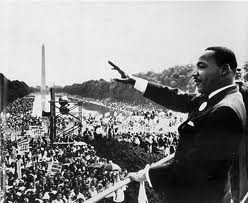
Martin Luther King Jr.


Dr. Martin Luther King Jr.


"If a man is called to be a street sweeper, he should sweep streets even as Michelangelo painted, or Beethoven composed music or Shakespeare wrote poetry.  He should sweep streets so well that all the hosts of heaven and earth will pause to say, 'Here lived a great street sweeper who did his job well.'"


American Civil Rights Leader/Preacher/Author


1929 - 1968


Dr. Martin Luther King Jr.


One of those games we play is:  "Where were you when . . ."  On April 4, 1968, I was a nineteen year old college student at Goshen College in Indiana.  Two months earlier I had the privilege of marching with Dr. King at a Vietnam War protest march in Washington D.C. The murder of Dr. King on my birthday in 1968 impacted me both emotionally and spiritually.


For the past twenty-five years I have been sharing this quote by Dr. King in my speeches on leadership.  I believe that work is spiritual in nature.  The work we do helps to cleanse our souls and free our spirits.  Many people see work as a negative condition.  They hate Mondays and grumble about having to go to work.  Many people wish they did not have to work.  But if you have ever lost a job and sat idle for a few months, you appreciate the value of work in your life.


As creative leaders we have a special opportunity to share the fruit of our labor with others. Most of my life I have dreamed of being able to give up my bill-paying job and write full time.  Fortunately, this never happened.  I think I am a better person for having the discipline to get up an hour earlier than everyone and writing before going to work.  Sometimes what we wish for is not in our best interests.  The bill-paying work and the creative work are both important and both have helped to make me a better person.


Be proud of the work you do.  Celebrate the work you do.  Be happy with the gifts you have been given.

Senin, 26 Oktober 2015

Mark Vonnegut


Writing for me is a spiritual exercise. I did not realize this until I read an essay several years ago in which Mark Vonnegut talks about his father, Kurt, one of my favorite authors. This quote opened for me the door into why I have spent 40 years writing without fame or fortune.


Since I rejected organized religion and experienced a spiritual crisis at age 18, writing became the spiritual road I walked. Writing gave my soul the courage and strength necessary to face the traumas of this world. I was called to be a preacher but I could not preach until I first cleansed my soul and made it strong through writing. 


The writing is what makes me whole, gives meaning to my life, and keeps me believing even when I feel there is nothing left to live for.  Writing is my spiritual path, my meditation and my gift of prayer.


What roads have you traveled?  What paths have you taken?  Have you questioned your faith or simply accepted the beliefs taught you as a child?  Is your art a spiritual path that you have wandered down?


Here are several of my spiritual poems.


Many do not understand my form of spirituality.  I do not fit into any mold or preconceived notion of what religion is or should be.  For some I am a sinner lost in the world.  Others ask why do you speak of God?  He does not exist?


For me, my salvation is in my ability to question — in my gift of doubt.  I walk the path of the doubting Thomas.  I shoulder the burden of uncertainty.  I live at the edge of chaos and thrive.


I ponder the question of why we are here — of what is the meaning of life.  I receive no answers, only more questions.  I choose to listen to the languages of God and wait for His Word.  I walk the path of no regret.


Senin, 12 Oktober 2015

Isak Dinesen


In the last 25 years, the publishing world has sought to give us more and more memoirs — people sharing their stories of sorrow and pain. They have taken Dinesen's quote to heart. And there is a lot of truth here. We all tell our personal story — if not to others, at least to ourselves.  By sharing our stories we can begin to heal the pain and suffering we have experienced.


When my wife and I wrote our book on pet loss, we gave voice to the pain that pet lovers feel when their pet dies. We allowed people to tell their stories.  We heard the tears of people who felt they had lost a soul mate.  Some said the pain was worse than the death of a parent or a divorce.  Some were still crying ten to twelve years after the pet had died.  Sharing their stories helped some to bring closure and healing to a painful time in their lives.

One of the best salves for healing the pain and sorrow that we feel is writing. The process of putting our feelings, thoughts, and experiences down on paper will give us the opportunity to work through our pain and sorrow.


Unfortunately, some of us don’t feel we can write. We feel that writing is something for professionals with creative talents but not for us. Yet writing is one of the most powerful techniques we have for clarifying our feelings and working through our emotions. By opening ourselves up and expressing our pain and grief on paper, we will release the emotions that are suffocating and depressing us. Giving vent to our anger and pain through writing will help set us free.


What is your story? What sorrows darken your face? Have you put it in words? In pictures? In music? Healing comes with the sharing of our stories.

I want to share with you a process, that if you follow it, will help you share your story and begin to heal your wounds and help you to recover from your sorrow.

Twelve Guidelines for Telling Your Story 


  1. Write for fifteen minutes every day. Discipline yourself to write even on those days you don’t feel like writing. 

  2. Write in longhand with a pen or pencil. Do not use a computer. 

  3. Begin either with the phrase “I remember’' or “I feel.” Whenever you run out of things to say, begin again with the phrase “I remember” and keep writing. 

  4. Write without stopping for the full fifteen minutes. Keep your hand moving at all times. 

  5. Write without thinking. Give free rein to your emotions and feelings. 

  6. Feel free to say whatever you want. Don’t worry about what others will think. 

  7. Be as specific as possible in your writing. Put in descriptive detail. 

  8. Don’t try to be creative or cute. 

  9. Don’t worry about spelling or grammar or what your English teacher taught you. You are not writing for a grade. 

  10. It is okay to cry while you are writing. Keep writing through the tears. Don’t stop. 

  11. Keep writing as long as you need. If you wish, you can expand your writing time to thirty minutes or an hour.

  12. Initially, do not share your writing with others. They may not understand your expression of your pain or may be hurt by what you write.


Senin, 29 Desember 2014

Brianna King


What the world needs now is more imagination and creativity.  Every day we face problems and challenges in our personal as well as our professional lives.  Too often we continue to respond to these problems in the same way that we have always responded.  We keep doing what we have always done and keep getting the same result.  Instead, we should be searching for new ways of solving the problems.


What challenges do you face as a creative leader?  What obstacles stand in your way of achieving the success you dream about?  Are you so focused on the problems that you fail to see the opportunities around the corner?  Shift your focus to the possibilities.  Choose a new path into the future.  Imagine a better world.


Albert Einstein once said, "Imagination is more important than knowledge. Knowledge is limited. Imagination encircles the world.”  


What are you doing to expand your imagination — to open the doors of creative thinking? What are you doing to escape of the black hole of negative thinking?  Here are five ways to increase your imaginative thinking.


  1. Develop an attitude of curiosity.  Be curious about everything.  Look for connections that others do not see.

  2. Question and challenge accepted beliefs, assumptions and practices.  Just because you have always done it a certain way does not mean you should continue to do it that way.

  3. Explore the world.  Travel to places you have never been.  Read books in fields of learning that you normally don't read.  Engage people outside your field of expertise in conversations and learn from them.

  4. Conduct daily doodling practice.  Doodle for 5 - 10 minutes.  Doodling helps to relax your mind and start your creative juices flowing.  Drawing can free your mind of entrenched ways of seeing. Create new ways of seeing by doodling.  Focus your attention on the doodling.  Don't worry about being artistic.

  5. Conduct daily writing practice.  Write everyday for 10 minutes.  Don't worry about grammar, spelling or punctuation.  Start with the phrase, "In the future, I".  Keep writing for the full 10 minutes.  When you run out of things to write, start again with the phrase, "In the future, I".


Remember that your imagination and creativity will help you solve most of your problems and help you build a better world.  Begin now to cultivate your imagination.  

Senin, 20 Oktober 2014

Richard Wollheim


"Learning appears as a way of staying young, perhaps of staying alive, and also as a way of growing up, perhaps facing death."


British Author, Philosopher


1923 - 2003


Commentary
Life-long learning is a powerful habit to develop. Learning something new keeps us in touch with our youth and helps us to stay active and alive. What have you learned in the last week? The past month?  Who has taught you something new about yourself or your art?

We experience the world through our senses — hearing, seeing, tasting, touching and smelling. And what we experience teaches us much if we are paying attention and alert to the possibilities. Did you smell the wind today? Did you hear the approaching storm? Do you taste the rain on your face?

From the time we are born until we die, our purpose is to learn, to grow, and to change. Most learning does not occur in school and we don't stop learning once we graduate. Cultivate a learning attitude. Unfortunately, many people do not learn from their mistakes. They are not willing to change and grow. To be a great artist or writer, you must be constantly learning about the world in which we inhabit.

And when we face death, it will teach us much that we have forgotten. Do not be afraid of death. Understand that it is a gift. It is a door through which we pass, a gate that leads to another world.


Biography


Wollheim was the son of actress and a theatrical agent.  He participated as a soldier in World War II and for a short time was a prisoner of war.  After the war, he studied philosophy, politics and economics.  He taught at the University College in London, Harvard University, Columbia University, University of Minnesota, the University of California at Berkeley as well as other universities.


Wollheim married Anne Powell in 1950 and had twin sons.  He married his second wife, Mary Day Lanier, in 1967 and she gave birth to a daughter.


Richard Wollheim is known for his philosophical work on mind and emotions as related to the visual arts.  He was president of the British Society of Aesthetics from 1992 until 2003


Wollheim wrote and published 14 books including a biography of Freud (1971), a novel entitled, A Family Romance (1969) and several philosophical books including Painting as Art, Art and Its Objects, The Thread of Life, On the Emotions, The Mind and Its Depths and The Germs: A Memoir of Childhood.