Tampilkan postingan dengan label Harley King. Tampilkan semua postingan

Senin, 16 Januari 2017

Harley King — Seeds of Hope


We live in difficult and challenging times.  Some have begun to despair that the world is coming to a violent end. I remember another moment in the late 1960's when I felt the world would end. What I have learned over the years is that the world continues.  There are always moments of hope to be found. We must choose to plant seeds of hope.


I believe that everything we do is a choice we make. We have little control over what happens to us. We have little control over the hostile world in which we live. The only thing we control is our response to what is happening. So my choice is to plant seeds of hope with my words and deeds. I choose to celebrate the spirit of love.


We also need to understand that even though we plant seeds of hope, we will not eliminate the hatred and hostility in the world.  So do not give into the false hope of changing the world overnight.  


If we choose to plant to seeds of hope, we will touch the lives of a few people. Every farmer knows, there are different types of soil and not all of it is fertile. I know that sometimes the seeds that I plant fall on stoney ground and the seeds fail to take root. I have learned that I can’t give hope to people if they are not ready to receive it. Sometimes it may take years for that seed to grow. And sometimes the seed is eaten by birds and squirrels. Have faith that some of the seeds you plant will grow and bloom.


Senin, 09 Januari 2017

Harley King — Gift of Memory


Without memory, we lose all sense of self. We lose the threads and tangles that tell our stories. We lose our history from where we came. We lose our connection to the past. Memory gives our lives meaning and explains who we are and from where we came.

Yet, memory is fragmented, distorted and unconnected. Distorted memories can create false selves and cause us unhappiness. We must reshape our memories into a cohesive story that allows us to enjoy the person whom we have become. We must dig through the ashes of forgetfulness and find the keys to who we are.


Cradle your memories in your arms.  Give them the love and attention that they need.  Memory restores us to the world in which we live.  Choose to cherish your memories.


And as creative leaders, you are fortunate to have the skills and talents necessary to craft memory into a powerful story that touches the hearts and souls of others. Through the retelling of memory life is restored.


Senin, 02 Januari 2017

Harley King — Best Books 2016


In 2016, I read 72 books, an increase of 17 (31%) over the 55 I read in 2015 and a 50% increase over the number of books I read in 2014.  My overall reading average was 6 books a month. From January through June, I averaged 7 books a month.  From July through December, I averaged 5 books a month.


Seventy percent of the books were fiction, 24% were non-fiction and 6% were poetry. Of the novels, 42% were fantasy, 18% were science fiction and 10% were mysteries.  Of the non-fiction books, 65% were biographies and memoirs.  Sixty-three percent of the books I read were e-books and 15% were audio books.


Here are the 16 best books that I read in 2016:


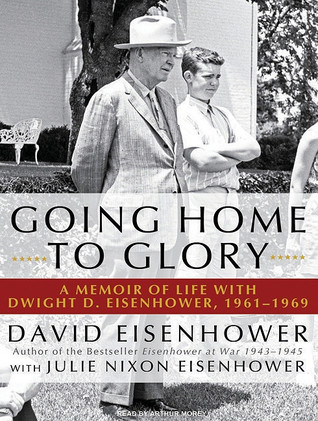
Going Home to Glory: A Memoir of Life with Dwight D. Eisenhower, 1961-196916. Going Home to Glory: A Memoir of Life with Dwight D. Eisenhower, 1961-1969 by David Eisenhower & Julie Nixon Eisenhower


An excellent memoir by the grandson of General Dwight D. Eisenhower and his wife about the last years of President Eisenhower's life and his relationship with his grandson. I found it interesting that Lyndon Johnson relied for Eisenhower for support and council and that he spent considerable time visiting Eisenhower in the hospital in 1968 and 1969. The books is based on David's memories and the interviews with many people who knew his grandfather. This is the first book that I have read about the life of Dwight D. Eisenhower and I found it a valuable introduction.


15. Living History by Hillary Rodham Clinton


Living History

My wife and I listened to this book on our 2,000 mile trip to the east coast. My guess is that Hillary Clinton is a introvert and Bill is an extrovert. Bill is energized by people and Hillary is drained. For me, this is also an explanation as to why so many people hate her. She has learned to overcome some of her shyness, but people don't seem to warm up to her easily. After listening to this book, I find Hillary to be a warm, caring individual committed to helping others. 


Hillary tells the story of her mother and father and how her mother was raised by her grandmother. Her father was raised in Scranton, PA but escaped to Chicago as fast as he could. Hillary came of age when women had more opportunities to go to college. She tells the stories of her college years, meeting Bill and her time in Little Rock, AK. Much of the book is her experiences in the White House and her campaign to be the New York senator.


If more people had read this book, we may have had a different outcome in the presidential election. Unfortunately, too many lies have been told about Hillary. For some people, it is easier to believe the lie than search for the truth.


Ike and Dick: Portrait of a Strange Political Marriage14.  Ike and Dick: Portrait of a Strange Political Marriage by Jeffrey Frank


This is a fascinating book about two men who worked together for eight years and maintained a relationship for another decade. Ike tried in 1952 and 1956 to dump Nixon from the Republican ticket but ultimately failed. Ike often assigned Dick to do his dirty work and when Ike was ill Nixon along with the cabinet held the fort down. 


Like any marriage, the pair had their good times and bad times. Each felt injured or hurt by the other. Nixon used Eisenhower as his sounding board during his political campaigns and often sought his opinion. The two families were forever entwined with the marriage of Nixon's daughter, Julia, to Eisenhower's grandson, David. 


I am surprised that other authors have not explored the relationship between Presidents and their VPs. I recommend the book to those who love history and biographies.


Pat and Dick13.  Pat and Dick by Will Swift


This book tells the fascinating love story of Richard and Pat Nixon and how their relationship survived the tumultuous world of politics. Without the emotional support, guidance and love of Pat, Nixon would never have become President. She was the force that kept pushing him. When people tried to force him to resign as the Republican Vice-Presidential candidate in 1952, Pat was the one who kept him going. She said:

"You can't think of resigning. If you do, Eisenhower will lose. You will carry the scar
 for the rest of your life. If you do not fight back but simply crawl away, you will destroy yourself."


Whenever Nixon was depressed and wanting to quit because of the pressure of the outside world, Pat was always there supporting him.

Winning Pat's heart was not easy. She initially had little interest in Richard but he persisted and eventually won her heart.

I highly recommend this book because it tells the love story and the heartbreak of an American Presidential couple.


Extraordinary, Ordinary People: A Memoir of Family12.  Extraordinary, Ordinary People: A Memoir of Family by Condoleezza Rice


This book is Condoleezza Rice's love poem to her mother and father. She tells the story of a very supportive mother and father who sacrificed to give her opportunities she had. Condi grew up in a family of teachers and preachers in Birmingham, AL, during segregated 50's and 60's. One of her friends was killed in the 1963 church bombing. Both of her parents were college educated and strong believers in education.

Her father, John Wesley Rice, was a Republican because the Democrats in Alabama refused to register him to vote, but a Republican did.

This memoir, written after her experience as Secretary of State under George W. Bush, tells her childhood story through her college years, her acceptance as a professor at Stanford, her mother's death, and her years as Provost at Stanford University. The book closes with the death of her father and Condi moving to Washington D.C. in 2001 as the National Security Advisor to George W. Bush.

I highly recommend the book because of the powerful love story between parents and a child that it tells. The warmth and humanity of the book touched my heart.


Dark Currents (The Emperor's Edge, #2)11.  Dark Currents (The Emperor's Edge #2) by Lindsay Buroker


Dark Currents is a fast-paced, action-filled steampunk fantasy populated with characters whose company I enjoy. This second book in the series kept me on my toes waiting and watching for what was to happen next. I would recommend the series to anyone who enjoys fantasy and action with a dose of mystery thrown in for good measure. I read the second and third books in the series in 2016.


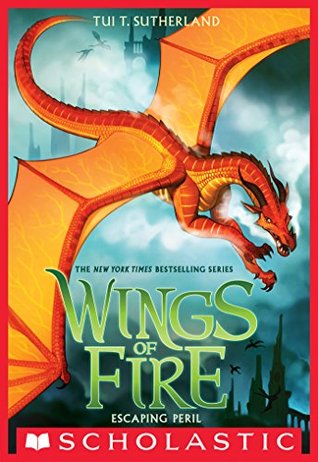
10. Escaping Peril (Wings of Fire #8) by Tui T. Sutherland

Escaping Peril (Wings of Fire, #8)

Escaping Peril is the eight book in the series. My daughter and I have read all nine books in the series together and have enjoyed discussing them. She waited for several months for the new book about Peril to arrive. Peril was a character in the first book in the series and my daughter has been fascinated by her ever since. She could hardly wait until book 8 came out. And we were not disappointed. Like the other books, this one took several unexpected twists and turns. If you enjoyed the other books in the series, you will enjoy this one. I would not recommend reading this one until you have read at least the first five. While the book can stand alone, there are so many nuances that will be missed if you have not read the others in the series.


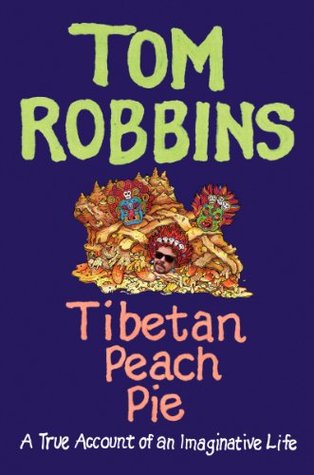
Tibetan Peach Pie: A True Account of an Imaginative Life9.  Tibetan Peach Pie: A True Account of an Imaginative Life by Tom Robbins


I read three of Tom Robbins novels back in the 1970's and 80's so I found this memoir humorous and engaging. Robbins is a master of the metaphor and the language. I laughed my way through this book and am glad that Robbins wrote it. I listened to it and believe the humor was even stronger because I heard the words spoken. I recommend it to those who love to laugh and who love the work of Tom Robbins.


8.  Being Nixon: The Fears and Hopes of an American President by Evan Thomas


Being Nixon: The Fears and Hopes of an American PresidentWhen Richard Nixon lost the 1960 Presidential election to John F. Kennedy, I was eleven years old and barely aware of politics. When Nixon won the 1968 election, I was in Jamaica as a college student and read very little news about the election campaign. Nine months earlier I had been knee deep in politics campaigning for Eugene McCarthy in Wisconsin. I even went Clean for Gene by shaving my beard. 1968 was a troubled year. Martin Luther King was shot in Memphis, TN and Bobby Kennedy was shot in LA. Mayor Richard Daley had his thugs beat up the hippies at the Democratic convention in Chicago. When Nixon resigned from office in August of 1974, I was married and studying for my Master's degree in theatre.


What I did not know until I read this book was that Nixon's actions helped to destroy the economy of the Midwest in the 1970's and 1980's. Nixon was a consummate politician who knew very little of economics. He proceeded to sever the dollar's connection to the gold standard, knowing it would bring about inflation. He also irritated the Arabs with his support of Israel during the 1973 war. This led to retaliation by OPEC and the oil embargo which helped to increase inflation as well.

Evan Thomas, in this excellent biography, is focused on emotional and psychological nature of Nixon. I learned that Nixon was very shy and uncomfortable around people. He avoided confrontation and held grudges against those who had done him wrong. He had an inferiority complex and had a love-hate relationship with those he perceived to be a part of the East Coast establishment, especially the Kennedy clan. Nixon was not very self-aware. He did not like to focus on the past. He preferred to look to the future.

Nixon was very loving and kind with his immediate family — his wife and daughters. He seemed to compartmentalize his life, behaving one way with his family and another in the world of politics. He was driven to succeed at all costs. Like many of us, Nixon had multiple facets to his personality. One minute he could be kind and supportive and the next yelling and cursing. His closest aides learned not to take him seriously when he went on a rampage. They often ignored his commands. Yet, he was very supportive of the underdog. When the Democratic Vice-President candidate, Thomas Eagleton, was forced out the presidential race in 1972 because of his treatment for depression, Nixon wrote a very kind letter to Eagleton's son.

I decided to read this book when I read where Bill Gates recommended it because it was one of the more balanced biographies of Nixon. And while I have not read any other biographies of Nixon, I would highly recommend this one to anyone interested in Nixon and the time period of the 1950's through 1970's. Evan Thomas tells us both the negative and the positive about the life of Nixon.


Eisenhower in War and Peace7.  Eisenhower in War and Peace by Jean Edward Smith


Dwight D. Eisenhower was elected President when I was 3 years old and left office when I was 11. I have read little about Eisenhower until this year. This is the 3rd book that I have read about him this year and is the first full biography.


Eisenhower was born on October 14, 1890 in Denison, Texas, the 3rd of 7 sons born to David and Ida Eisenhower. His father had moved the family from Kansas in 1888 to find work. The Eisenhowers only lived in Texas for 4 years before they moved back to Kansas. Dwight's ancestors originally arrived from Germany in 1741. David's father was a preacher with the River Brethren, an offshoot of the Mennonites. Like the Mennonites, the River Brethren did not believe in fighting in wars.

Religion was a major part of the fabric of Eisenhower family. David would begin the day by reading the Bible to the family. They said prayers before meals and the boys read the scriptures at night. Dwight had read the entire Bible twice before entering West Point.

Dwight's father was a very strict and stern man who did not play with his sons nor take them fishing or hunting. Ike's brother, Edgar, said about their father: "He was an inflexible man with a stern code. Life to him was a very serious proposition and that's the way he lived it, soberly and with due reflection."

Dwight's mother, Ida, had the greatest influence on the boys. She was present in their lives and usually found the humor in most situations. In spite of his pacifist upbringing, Dwight sought and received an appointment to West Point where he was admitted in June of 1911. Eisenhower graduated 61st in a class of 164 and was assigned to San Antonio where he met his future wife, Mary Geneva Doud. They were married on July 1, 1916.

Eisenhower did not have the opportunity to see any action on the battle field during World War I. Between the two wars he held administrative posts in various places. In December of 1926 Dwight was assigned to the American Battle Monuments Commission under John J. Pershing. In December, 1927 he moved to Paris to continue the work under the Monuments Commission where he explored first hand the terrain of France. This experience helped prepare him for the invasion of Europe.

In October 1935, Eisenhower sailed to the Philippines to serve under Douglas MacArthur. MacArthur delegated the day to day operations to Eisenhower and James Ord. MacArthur only came into the office about an hour a day.

In June of 1942, Eisenhower was given the command of the invasion of Europe. His first task was to establish a command structure. Eisenhower initially made some serious mistakes as the army tried to retake northern Africa before entering France. He had never commanded troops in combat and did not do well as a field commander. He was better at overall organization and in public relations. He was skilled in managing the top brass. Eisenhower was name Supreme Commander where he could devote his time to the political and inter-allied problems. Others were given direct field command of the soldiers. Dwight was promoted to a four star general. The invasion of Europe began in June, 1944. Eisenhower made the final decision when to start the attack. Victory in Europe made Eisenhower an international hero.

In 1952, Ike Eisenhower won the Republican nomination for President against Adlai Stevenson, the Democratic nominee. The 1952 campaign has been called one of nastiest on record at the time. There were bogus claims about a Communist conspiracy in the Truman administration and the GOP launched a negative campaign questioning the sexual orientation of Governor Stevenson. More than 61 million Americans voted and Ike won 55% of the popular vote. He won 442 electoral votes to Stevenson's 89.

Eisenhower served as President during eight years of peace and prosperity. When he left office in 1961, his popularity ratings were as high as when he was inaugurated.

This is an excellent biography by Jean Edward Smith. The book gains momentum with the discussion of Eisenhower's activities during World War II and his accomplishments and failures during his Presidency. I highly recommend this book to anyone interested in learning more about the life of Dwight D. Eisenhower.


Dragon Seed: The Story of China at War6.  Dragon Seed: The Story of China at War by Pearl S. Buck


This is a brilliant anti-war novel seen through the eyes of a Chinese family of farmers. Buck writes of the invasion of China in 1937 by the Japanese. This is a novel that everyone should read.


Slaughterhouse-Five: The Childrens Crusade, a Duty Dance with Death5.  Slaughterhouse-Five: The Childrens Crusade, a Duty Dance with Death by Kurt Vonnegut


I have been a fan of the work of Kurt Vonnegut for over 40 years. My favorite book of his is Cat's Cradle. I also heard Vonnegut speak in the 1980s while I was living in the Indianapolis area. I read Slaughterhouse-Five while in college shortly after it came out. I don't remember that the book impressed me that much at the time. And now I understand why: the book is not a linear narrative. It jumps back and forth in time as well as place. It involves space travel, war and eye glasses. While I loved science fiction, this did not seem like science fiction. 


So, all these years later, I decided to listen to Slaughterhouse-Five and loved it. The voice of Ethan Hawke set the tone for the book and allowed me to better appreciate the non-linear narrative. I highly recommend this book to everyone. Sometimes listening to a story is even better than reading it.


4.  Shoeless Joe by W.P. Kinsella


Shoeless Joe

I read the Iowa Baseball Confederacy by Kinsella back in the 1980s, but never read Shoeless Joe. I have, though, watched Field of Dreams on multiple occasions. I usually don't like to read books after I have seen the movie, but decided to give this one a try. I found myself initially visualizing the characters in the image of the actors in the movie, but it was not a hindrance since I love the movie. All the major movie scenes are in the book, but a couple of characters in the book were cut from the movie — Ray's twin brother and Eddie Sessions, the farmer who sold the farm to Ray. Also the movie changed the character of J.D. Salinger to Terrence Mann.


The book at its core is about the nature of obsession and how people pursue their dreams against all odds. The book and movie are both motivational and inspiring.

I discovered after reading the book that W.P. Kinsella was Canadian. He did earn a Masters from the Iowa Writers Workshop. I recommend the book to all lovers of dreams and baseball.


3.  Middle Age: A Romance by Joyce Carol Oates


Middle Age: A Romance

Joyce Carol Oates, a master novelist, is one of the most prolific writers of her generation. This is the second of her novels that I have read. Both novels start with an event — in this case the death of a neighbor and friend — and follow the impact on various people. The event triggers in each character an opportunity to re-evaluate his or her life. Some are more successful at this then others. This is a book worth reading by one of the great American novelists. Don't let the insipid title get in the way of picking up this book. There is more nuance and depth to this book then the title will lead you to believe.


2.  The Girl Who Wrote in Silk by Kelli Estes


The Girl Who Wrote in Silk

The Girl Who Wrote in Silk is a brilliant novel by Kelli Estes. Set simultaneously in the 1880s and present day, Estes tells the tragic historical story of how the Chinese were driven out of northwest Washington by white men. The heart of the novel is the story of Mei Lien and her family who are forced out of their home in Seattle onto a ship that is bound for China back in the 1880's. Mei Lien discovers that the Chinese are not being taken to China, but that the plan is to throw them overboard when the ship is far enough from shore. When she tells her father, he makes the decision that she needs to jump overboard while there is still opportunity for her to swim to shore. Mei Lien is rescued by a white man who ultimately becomes her husband. Mei Lien's tale is the story of racism and the anti-Chinese hysteria that ran through the villages and towns on the west coast of Washington before it became a state.

Wrapped around Mei Lien's story is the story of present day Inara who discovers an embroidered sleeve and attempts to find out its historical importance.

The message of the story is very relevant today amidst the current immigration and anti-Muslim hysteria that has overtaken many people in this country. This is book is a must read for everyone who cares about people.

This novel is Kelli Estes' first published novel and has been fourteen years in the making. Estes writes: "In the fourteen years between quitting that job and selling this novel, I wrote six manuscripts, attended countless writing workshops and conferences, and raised two boys who are now in school all day, which allows me to focus on writing."

I highly recommend that everyone read this novel for a better understanding of a tragic time in American history and the pain that racism causes. Racism touches everyone and is not just about blacks and whites, but is also about Asians, Hispanics and anyone who does not fit the perceived norm.


The Sacrifice: A Novel1.  The Sacrifice: A Novel by Joyce Carol Oates  Another fantastic novel by Joyce Carol Oates. She has the ability to create a realistic fictional world that feels right out of the pages of life. I would highly recommend that you listen to the reading of this story by multiple actors. This book provides a serious look at racism in America through fiction. Everyone should read this book.


Senin, 12 September 2016

Harley King — Tomorrow


During a conversation with a colleague this week, she asked me in jest: "What is the meaning of life." I responded with the first thing that came into my mind: "The sun will rise tomorrow."  And we both laughed.


On the surface, this appears to be a mundane, boring observation about the obvious. We all know the sun will rise tomorrow so we never give it any further thought.  We sometimes become so caught up in the stresses, challenges and problems that vex our daily lives that we act like the world is coming to an end. What we often forget is that tomorrow is a new day filled with new opportunities. 


In my 67 years on this planet, the sun has never failed to rise.  Now, I may not have been able to see it  on some days because of the clouds, but I knew it was there. This may seem like a simple observation, but it is filled with wisdom. If we choose, each new day is an opportunity to begin again. Every time the sun rises, we are given a chance to try something different — to find another path.


Have you ever sat before a blank piece of paper and had no idea what to write?  Have you ever stood before a blank canvas and had no idea what to paint?  Do you remember your frustration and maybe even anger?  Have you ever spent a few hours writing or painting and felt that your work was worthless? Have you ever wanted to give up and quit?  Remember that today will simply pass into history and tomorrow will be a brand new day that offers the opportunity to start again.


So tomorrow, give thanks for the sunrise and shout, "Good morning, world!" from the roof tops.

Senin, 08 Agustus 2016

Harley King - Heroes and Stories


Are you the hero of your story? Or are you the victim? We all have faced challenges in our lives and we have struggled to overcome difficulties. We have people who seek to hurt us and cause us harm. Have you found the strength to share your story of triumph and victory over the pain? Or are you still dwelling in a past of unhappiness? Maybe it is time to retell your story with you as the hero. Maybe it is time to celebrate your healing.


Our stories are not new.  Others have tread the same path and faced the same challenges.  The difference is in the details. The difference is in our memories. Share your memories and the details that make your story unique. Share what is special about your story.


The fact that I have been fired five times in my career is a part of my story. Yet, I have risen from the ashes of failure to find new paths. I have used my failures as opportunities to grow and change. I have overcome the pain of loss. I have become the hero, not the victim.  I have been employed by the same company for the last 28 years.


The fact that I was diagnosed with prostate cancer is a part of my story.  Yet, today, ten years later, I am cancer-free.


The fact that editors have rejected my poems is a part of my story.  Yet, I did not let the rejection stop me from writing.  I chose to keep writing and have now written over 5,000 poems.  And I still write and rewrite my story.  I celebrate my story. 


What stories are you telling? Are you the hero?  Or the victim? Is it time to rewrite your story?


This entry marks the 950th post to this inspirational blog filled with positive quotes and comments. I have written every week for six years, beginning with my first entry on August 7, 2010.  The first two years I posted a daily entry. During the last four years I have posted weekly. I am writing and rewriting my story.

First blog post: August 7, 2010

http://harleyinspiration.blogspot.com/2010/08/every-flower-is-soul-blossoming-in.html

Senin, 04 Juli 2016

Certified Zentangle Teacher


I am now a Certified Zentangle Teacher (CZT). I attended a 3 day workshop in Providence, RI, last week and am now certified to teach Zentangle art. People learn to draw abstract patterns using black ink on white tiles. Zentangle practice is a relaxing and meditative form of art.

https://www.zentangle.com/zentangle-method

Here are some examples of my recent creations.


Senin, 04 Januari 2016

Harley King


In 2015, I read 55 books, an increase of 7 over 2014.  Sixty percent of the books were e-books, twenty-two percent were printed books and nineteen percent were audio books.  I continue to read more e-books than printed books because of both convenience and cost.  I read 35 works of fiction, 18 non-fiction books and 2 poetry collections.


Here are the sixteen best books I read in 2015.


I Can See Clearly Now16. I Can See Clearly Now by Wayne Dyer  


I had the opportunity to hear Wayne Dyer speak in person about 20 years ago.  I was a member of the Michigan chapter of the National Speakers Association.  The speaker before him was very high energy and kept the audience engaged for 3 hours.  The chapter presented an award to Dyer for what he had accomplished in life.  He spoke for 30 minutes following 3 hours of high energy.  When he first came on stage, I thought we were in trouble.  We had been there all day and Dyer spoke very softly in contrast to the previous speaker.  But he had us listening to his every word within less than a minute.  There was a peaceful gentleness about him that just captured our attention.


I have since listened to Dyer on CD multiple times.  When he recently passed on to the next world, I started to read his memoir and it is an amazing book.  It is not your typical memoir.  He organizes the book around key intellectual, philosophical and spiritual events in his life.  After writing about the event, he tells what the event means to him looking back on it all these years later.  He connects the key dots in his life and we begin to understand the intellectual underpinning of his books.


You will not find a lot of personal stories about his wives and children.  He only hints at what happened between his first wife and him.  The closest he comes to sharing his pain is in the chapter where his second wife leaves him for another man and he spends two years in deep depression.


The book is inspirational and full of spiritual connections.  Near the end of his life he gave up his home and the things he owned in Florida and walked away.  I highly recommend this book to anyone who has read any of Wayne Dyer's books or heard his CDs or seen his PBS programs.  The man communicates on a very deep spiritual level.
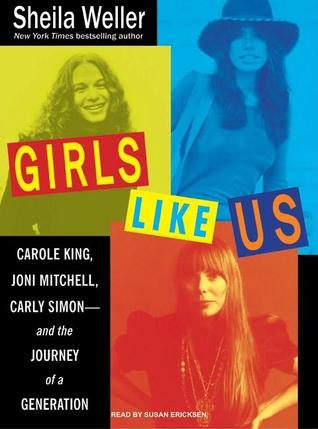


Girls Like Us: Carole King, Joni Mitchell, Carly Simon---and the Journey of a Generation15. Girls Like Us: Carole King, Joni Mitchell, Carly Simon — and the Journey of a Generation by Sheila Weller  


Sheila Weller is an amazing storyteller who has done her homework.  A lot of research has gone into this book which is about the lives of a generation of women as seen through the lives of 3 female singers of the era.  I knew much of the Carole King story having read her memoir and listened to her music.  I knew a lot less of Joni Mitchell and Carly Simon.  Weller fills her book with details of the lives of the three women but also the people who joined them on their journey.  I would recommend the book to anyone who grew up listening to Carole, Joni and Carly as well as anyone interested in the music of the era and the lives of the artists.
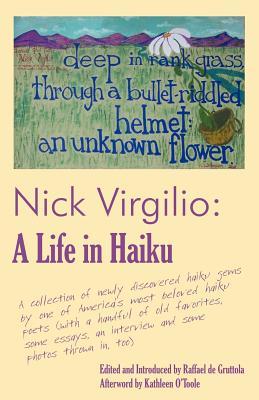


Nick Virgilio: A Life in Haiku14. Nick Virgilio: A Life in Haiku by Nicholas A. Virgilio  


I first read the haiku of Nick Virgilio in haiku magazines in the 1980s.  I also read his haiku in the The Haiku Anthology edited by Cor Van Den Heuvel.  This is the first collection of his haiku that I have read.  One of my favorite haiku by Virgilio is:


the sack of kittens

sinking in the icy creek

increases the cold


Farmers sometimes kill litters of baby kittens because there are too many cats on the farm.  In this haiku, we see the farmer standing by the creek watching the sack sink into the icy water.  He is not happy that he has to kill the kittens, but he knows it is for the best so they don't starve to death.  Yet he is uncomfortable and maybe even thinking of his own death.  It is winter and there is snow on the fields.  The farmer has some time on his hands.  The harvest is over and spring is still weeks away.  Watching the kittens die, the farmer feels a shiver through his body.


In the world of haiku, Nick Virgilio is known for the haiku he wrote about his brother who died in Vietnam.  This is one of my favorites:


deep in rank grass,

through a bullet- riddled helmet:

an unknown flower


Here the poet walking through a war-torn countryside comes upon a soldier's helmet and is surprised to see a flower popping through the holes in the helmet.  Even in death, there is life.  Just as the owner of the helmet is unknown to the poet so is the flower.  And yet that is okay.  We can not know everything.  No matter how violent life is, we can always find some beauty.


In one of the essays in the book, Virgilio compares himself to the Japanese haiku poet, Buson, in that like Buson he composes him poems.  For him it is not based simply on an experienced moment.  He would write and rewrite the haiku until he was satisfied.  The helmet poem above was inspired a photograph he saw in a newspaper in 1967.  The last line came to him during a conversation he was having with a friend.


In an interview published in the book, Virgilio discusses a haiku he created to communicate receiving the news of his brother's death.


telegram in hand,

   shadow of the marine

       darkens our screen door


In these eleven short words, Virgilio captures the essence of the moment.  The poet is focused on the small things:  the shadow and the screen door.  He may even be in denial.  He is staying at the edges of the truth.  And yet he knows the truth is there:  his brother is dead.  He doesn't want to face it head on.  


I highly recommend this book of haiku poetry by one of America's best haiku poets to all poets and lovers of poetry.


Yogi Berra: Eternal Yankee13. Yogi Berra: Eternal Yankee by Allen Barra  


I was inspired by Allen Barra's book on Willie Mays and Mickey Mantle to read this one on Yogi Berra.  As a St. Louis Cardinal fan, I never had much interest in the NY Yankees, but I found this biography of Yogi to be fascinating.  Yogi's career was coming to an end when I became interested in baseball as a child.  Unlike many athlete heroes, Yogi appears to have few personal flaws.  Growing up in an Italian neighborhood of St. Louis, he hoped to play for the Cardinals, but when he was offered only a $250 sign on bonus he refused because it was less than the $500 paid to his friend, Joe Garagiola.  Yogi was the inspiration for the cartoon character, Yogi Bear.  I recommend this book to baseball fans, Yankee fans and Yogi fans.


Sidetracked (Wallander #5)12. Sidetracked by Henning Mankell  


I last read a Henning Mankell novel back in 2011, but I felt like I was coming home when I read this novel.  I enjoy being in the company of Kurt Wallander.  He is a bit of a depressive, but he is tenacious.  This novel finds him on the trail of an axe murderer.  This is a great read that I would recommend to all who enjoy mysteries.


The Kizuna Coast (Rei Shimura Mystery, #11)11. The Kizuna Coast by Sujata Massey  


The Kizuna Coast is another excellent Rei Shimura mystery.  This one is set in Japan right after the earthquake and tsunami in 2011.  I was first introduced to the character of Rei in 2014 when I read The Flower Master.  I appreciated seeing the aftermath of tsunami through the eyes of a novelist.  Of the 4 Shimura mysteries that I have read, this is easily my favorite.  I highly recommend it to all readers of novels, not just mystery lovers.


Brush Back (V.I. Warshawski Novels)10. Brush Back by Sara Paretsky


This is my eleventh V.I. Warshawski novel and it has been a couple of years since I read my last one.  Reading the book was like visiting an old friend and catching up on what has happened to her in recent years.  At the age of fifty, Warshawski continues to stir the pot and get herself beaten up.  But in the end, she comes out on top, although, not always wiser. I enjoy the novels not so much for the plot as the voice and character of V.I. She is a great character. I highly recommend this book and the series to lovers of mysteries and strong women P.I.s.


Death of a Doll Maker (Sugawara Akitada #11)9. Death of a Doll Maker by I. J. Parker


I am addicted to the Sugawara Akitada historical mystery series set in 11th century Japan.  I have read 8 of the novels including 5 this year.  I.J. Parker is skilled at telling stories where Akitada not only solves mysteries but also has to cope with the challenges and pain of living.  The book is a great read, but I recommend reading early books in the series first.



A Fighting Chance8. A Fighting Chance by Elizabeth Warren


I knew very little about Elizabeth Warren prior to reading the book and I walked away impressed. Warren shares the story of her 10 year battle with big banks on the behalf of middle class working people and how she lost.  Warren is a law professor and bankruptcy expert turned activist and politician.  Mixed in with discussion of her fight with the banks is Warren's personal story of being born in Oklahoma and her struggle to obtain a college degree.  She tells the story of her marriage and divorce and re-marriage.  She talks of giving birth and raising her children and becoming a grandmother.  She also tells the story of her senate race to fill the seat of Ted Kennedy after he died.


I recommend the book to anyone who likes to read political memoirs or who is interested in bankruptcy and the banking industry and consumer protection.  I also recommend listening to the book rather than reading it so you can hear the passion and concern in her voice since she recorded the book herself.  
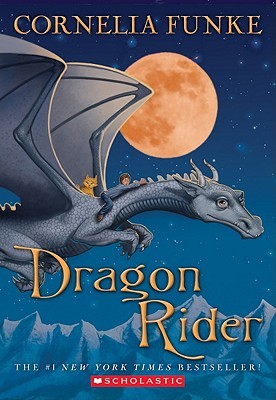


Dragon Rider7. Dragon Rider by Cornelia Funke  


I read this excellent book with my seven-year-old daughter.  I started reading it to her.  Then she wanted to read it to me.  Then we traded back and forth.  She would read two pages and then I would read two pages.  Excellent adventure story involving a silver dragon, a brownie, a boy and other characters.  Funke does a great job of weaving a story and drawing the reader in.  I would recommend this both for adults and children.


Ripper6. Ripper by Isabel Allende


Contrary to some negative reviews that I have read, I feel Ripper by Isabel Allende is a fantastic novel.  Allende tells the story in a circular manner which seems to bother some people but it is story telling at its finest.  The story keeps circling around the characters and slowly expands the world the story inhabits.  This style of storytelling is not normally seen in mystery novels.  I first discovered the style when I read the novels of John Irving who wrote one of my favorite novels, A Prayer for Owen Meany.  It took me several attempts before I actually read A Prayer... and the same may hold true for people who attempt to read Ripper.


This is the third novel that I have read in the last 2 years that was written in the circular storytelling style.  In 2014, I read Saving Fish From Drowning by Amy Tan and in 2013, See Now Then by Jamaica Kincaid.  All three books received negative criticism for repetition which means the reviewers did not understand the style of storytelling.  Circular storytelling, which can be very poetic in the right hands, builds the story through repetition and slowly draws the listener in.  Sometimes it is better to listen to circular storytelling than reading it on the page so I recommend that potential readers consider the audio version.  I wager you will like it better.
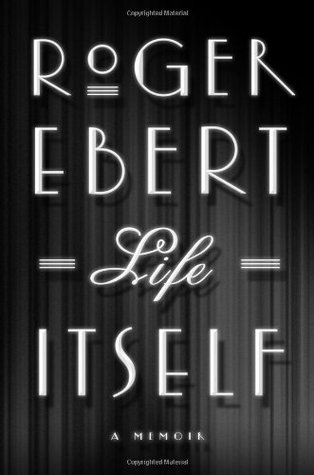


Life Itself5.  Life Itself by Roger Ebert 


I must confess that Roger Ebert was not my favorite movie critic.  I preferred Gene Siskel.  But this memoir has changed my opinion about Ebert.  Roger Ebert was raised in Urbana, Illinois in the 1940's and 50's.  I lived in Champaign-Urbana from 1975 -1982 so I was familiar with some of the things he talks about.  Even though Roger's mother wanted him to be a priest, his passion was journalism.  He did not set out to be a movie critic, but spent most of his life discussing movies in print and on television.


Late in life, cancer and 3 surgeries destroyed Ebert's ability to speak and eat.  He turned to writing his life story.  What amazed me is how much he remembers.  He says that he has always had a good memory, but not being able to engage in conversation with others opened up the flood gates and the memories poured through.


I found the book entertaining, funny with touching moments where Roger shares of himself.  I would recommend it to anyone who loves memoirs, journalism or the movies.  He does not tell his story in a straight forward fashion but skips around much as memory does — jumping back and forth in time.  I would have enjoyed having a conversation with Roger while sitting down to dinner.


Hard Choices4. Hard Choices by Hillary Clinton


Hard Choices is full of stories of Clinton's time as Secretary of State and the people she met.  I was fascinated and intrigued as I read it.  She tells stories of both failures of diplomacy and successes.  She provides insight into many of the key players on the international scene and some historical context to current events.


If you are interested in international politics, you should read this book with an open mind.  While you may not agree with Clinton's conclusions, you will have a better understanding of who Hillary Clinton is and the challenges the United States faces on the world stage.  

I also have walked away with the belief that people who run for President should have spent time as Secretary of State.  Presidents have less influence on the internal affairs of the country than they do on the international scene.  Congress has greater control and influence on the American society than any one President.  Congress makes the laws and determines the direction of the country.  Decisions made in Congress are with us for generations.  Presidents can twist arms, but in the end, their influence is short-lived.  Presidents can do more on the world stage than they can at home.  Unfortunately, most candidates for President have very little experience on the international stage and waste much of their time in office learning how the world works.  If Presidents spent time as secretary of state before running for President, they would have a greater opportunity to influence world events.


I would recommend this book to anyone interested in international politics or in understanding what makes Hillary Rodham Clinton tick.  I also would recommend that you listen to the audio version of the book.  While Clinton read the opening and closing chapters of the book, she did not read the entire book.  Kathleen Chalfant did an excellent job of reading most of the book. Though, I would have preferred to have Hillary's voice all the way through.


No Higher Honor: A Memoir of My Years in Washington3. No Higher Honor by Condoleezza Rice


After listening to the audio book by Hillary Clinton on her experience as Secretary of State, I decided to follow it with No Higher Honor by Condoleezza Rice, her predecessor.  The books are in many ways very similar both in the telling and in the stories being told.  


Rice tells a very powerful story about her 8 years of experience in the Bush Administration as the National Security Advisor and the Secretary of State.  She was introduced to George W. by his father whom she had served under during his administration.  Rice consistently defends the George W. and his decisions.  His administration was deeply influenced by the 9/11 attacks on New York and Washington, D.C.  She discusses the fear that permeated the administration in the months and years that followed the attacks. The way the Administration saw the world was colored by that fear.  While Rice admits making mistakes in her positions, she does not voice any negative feelings toward George W.  She is less positive about Dick Cheney and Don Rumsfeld with whom she experienced major disagreements, although one has to read between the lines to gain a sense of the conflict.


Rice grew up in the segregated Birmingham, Alabama.  She tells the story of how one of her kindergarten friends was killed during the 1963 church bombing in Birmingham.


One of my favorite anecdotes was during a trip to Rome for the funeral of the pope.  She was sitting between George W. and Bill Clinton.  She said Bill talked all the time and George did not talk.  The story, I believe, is very telling about the differences between the two men.


Rice did her own recording of the audio book so one hears the story in her voice.  I would highly recommend the book to anyone interested in politics, history and the international world.  The book offers more of the story than one finds in the newspapers and on television.  And I would also recommend that one reads it in conjunction with Hillary Clinton's book on her experiences.  Hillary opens her book with the letter she received from Condoleezza.  


2. The Making of The President 1960 by Theodore H. White


The Making of The President 1960 earned the author, Theodore H. White, a Pulitzer Prize in 1962.  In the  book, White, a journalist, follows the candidates from the moment they made the decision to enter the race for the Presidency until Kennedy was elected.


In the 1970’s I had read White’s The Making of the President 1968, the third of 4 books in the series.  I was impressed with book when I read so decided with being on the doorstep of the 1916 election that I would read the original book in the series.


The book is as relevant and important today as it was in 1960.  White has the reporter’s knack of capturing the detail that makes the story exciting even 55 years after the event.  Many of the issues that he identifies in the 1960 campaign are still relevant today.  He also has a strong sense of history and is able to put the events of the time in historical context.


White touches on the fact that the peaceful transfer of power from one person to the next is unusual in the annals of history.  White writes:


“Heroes and philosophers, brave men and vile, have since Rome and Athens tried to make this manner of transfer of power work effectively; no people have succeeded at it better, or over a longer period of time, than the Americans.”


The Democrats seeking the nomination of their party in 1960 included Senator Hubert Humphrey of Minnesota, Senator Stuart Symington of Missouri, Senator Lyndon B. Johnson of Texas, former Illinois governor Adlai Stevenson II and Senator John F. Kennedy of Massachusetts.  The Republicans seeking the nomination of their party in 1960 were Governor Nelson Rockefeller of New York and Vice-President Richard M. Nixon. 


White is excellent at summing up a situation in a very simple image.  After Humphrey had lost the primary in West Virginia which ended his campaign, White writes: “In the morning, when Humbert Humphrey woke, the Presidential image had evaporated. Outside the Ruffner Hotel his parked bus had overnight been given a ticket for illegal parking.”


Lyndon Johnson, like some politicians today, was seen as being too close to the workings of Washington.  Johnson’s weakness was that he believed that the Senate was America and that he was the Senate. In a very relevant passage even today, White writes: “Long service in Washington at the court of power decisions causes men to forget that power rises ultimately from beyond the Potomac.”


Here is one of White’s descriptions of Kennedy: “He had mastered politics on so many different levels that no other contemporary American could match him. He had nursed ward politics with his mother’s milk; heard it from his grandfathers, politicians both, in boyhood; seen it practiced from his father’s embassy in London at the supreme level of world events in 1939, as war and peace hung in the balance.”


White fills his book with telling details.  He writes: “At almost any moment of afternoon and evening on the road, soup is the favorite Kennedy dish — almost any kind of soup: chicken soup, tomato soup, bean soup and his favorite New England clam chowder.”


White reviews in detail the impact of the changing demographics on the politics of the time.  Between 1950 and 1960, the population of the country grew by 18%.  Forty-one million Americans were born during the period and 16 million died.  Two-thirds of the growth had occurred in the suburbs.


White also discusses immigration which statistically began being counted in 1819 as required by Congress.  White writes, “In 1820 America held 9,638,000 people, of whom almost 20 per cent were Negroes; and the rest are considered to have been the parent ‘colonial stock’ of America — an overwhelmingly British stock, spiced lightly with adventurers from all northern Europe.”


Over 40 million immigrants entered the country between 1820 and 1960.  The Irish came first.  Between 1847 and 1854, over one million Irish entered the country.  Almost 900 thousand Germans came between 1850 and 1857 and they kept coming in waves.  By 1960 people with German heritage had become the second largest component of the American population.  The Scandinavians arrived in the late 1800s.  In the early part of the 20th century, more than 3 million Italians arrived.  


White also writes about the issue of religion.  He reminds us that many of the early settlers came to escape the religious wars of Europe.  The memories of how they were punished in Europe for their religious beliefs led to the decision that government had no right to make inquiry into the faith of its citizens and that the state should not have any connection to religion.  People were free to worship as they pleased without guidance from the government.


I think every American would benefit from the reading and rereading of this book. White is a great storyteller who helps us understand how politics work and how Presidents are elected to serve the people.  


The Cider House Rules1. The Cider House Rules by John Irving  


This is another brilliant novel by Irving, one of American's finest novelists.  I saw the movie based on the novel about 15 years ago.  I remember little of the movie except for Michael Caine who played Dr. Larch.  Irving is a phenomenal storyteller who tells his stories in a circular fashion.  Each circle reveals more of the story.  Detail after detail is slowly revealed.


The story is about abandonment — about orphans and abortions and about unwanted children.  Dr. Larch has spent a lifetime doing what he calls: "God's work."  He delivers unwanted babies, raises them in the orphanage until he can find a home for them.  He also provides abortions to women who are early enough in their pregnancies.  At the heart of the story is Homer Wells for whom Dr. Larch could never find a home.  Larch teaches him how to deliver babies.  Homer ventures out into the world and his life becomes entangles with the lives of Candy and Wally.  This is a novel that everyone should read.