In 2016, I read 72 books, an increase of 17 (31%) over the 55 I read in 2015 and a 50% increase over the number of books I read in 2014. My overall reading average was 6 books a month. From January through June, I averaged 7 books a month. From July through December, I averaged 5 books a month.
Seventy percent of the books were fiction, 24% were non-fiction and 6% were poetry. Of the novels, 42% were fantasy, 18% were science fiction and 10% were mysteries. Of the non-fiction books, 65% were biographies and memoirs. Sixty-three percent of the books I read were e-books and 15% were audio books.
Here are the 16 best books that I read in 2016:
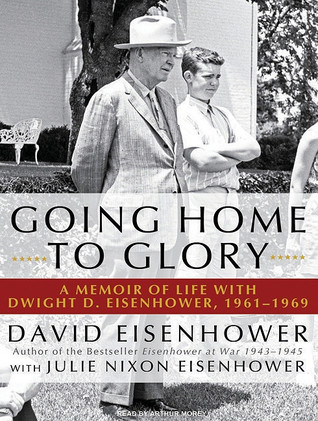 16. Going Home to Glory: A Memoir of Life with Dwight D. Eisenhower, 1961-1969 by David Eisenhower & Julie Nixon Eisenhower
An excellent memoir by the grandson of General Dwight D. Eisenhower and his wife about the last years of President Eisenhower's life and his relationship with his grandson. I found it interesting that Lyndon Johnson relied for Eisenhower for support and council and that he spent considerable time visiting Eisenhower in the hospital in 1968 and 1969. The books is based on David's memories and the interviews with many people who knew his grandfather. This is the first book that I have read about the life of Dwight D. Eisenhower and I found it a valuable introduction.
15. Living History by Hillary Rodham Clinton

My wife and I listened to this book on our 2,000 mile trip to the east coast. My guess is that Hillary Clinton is a introvert and Bill is an extrovert. Bill is energized by people and Hillary is drained. For me, this is also an explanation as to why so many people hate her. She has learned to overcome some of her shyness, but people don't seem to warm up to her easily. After listening to this book, I find Hillary to be a warm, caring individual committed to helping others.
Hillary tells the story of her mother and father and how her mother was raised by her grandmother. Her father was raised in Scranton, PA but escaped to Chicago as fast as he could. Hillary came of age when women had more opportunities to go to college. She tells the stories of her college years, meeting Bill and her time in Little Rock, AK. Much of the book is her experiences in the White House and her campaign to be the New York senator.
If more people had read this book, we may have had a different outcome in the presidential election. Unfortunately, too many lies have been told about Hillary. For some people, it is easier to believe the lie than search for the truth.
 14. Ike and Dick: Portrait of a Strange Political Marriage by Jeffrey Frank
This is a fascinating book about two men who worked together for eight years and maintained a relationship for another decade. Ike tried in 1952 and 1956 to dump Nixon from the Republican ticket but ultimately failed. Ike often assigned Dick to do his dirty work and when Ike was ill Nixon along with the cabinet held the fort down.
Like any marriage, the pair had their good times and bad times. Each felt injured or hurt by the other. Nixon used Eisenhower as his sounding board during his political campaigns and often sought his opinion. The two families were forever entwined with the marriage of Nixon's daughter, Julia, to Eisenhower's grandson, David.
I am surprised that other authors have not explored the relationship between Presidents and their VPs. I recommend the book to those who love history and biographies.
 13. Pat and Dick by Will Swift
This book tells the fascinating love story of Richard and Pat Nixon and how their relationship survived the tumultuous world of politics. Without the emotional support, guidance and love of Pat, Nixon would never have become President. She was the force that kept pushing him. When people tried to force him to resign as the Republican Vice-Presidential candidate in 1952, Pat was the one who kept him going. She said:
"You can't think of resigning. If you do, Eisenhower will lose. You will carry the scar for the rest of your life. If you do not fight back but simply crawl away, you will destroy yourself."
Whenever Nixon was depressed and wanting to quit because of the pressure of the outside world, Pat was always there supporting him.
Winning Pat's heart was not easy. She initially had little interest in Richard but he persisted and eventually won her heart.
I highly recommend this book because it tells the love story and the heartbreak of an American Presidential couple.
 12. Extraordinary, Ordinary People: A Memoir of Family by Condoleezza Rice
This book is Condoleezza Rice's love poem to her mother and father. She tells the story of a very supportive mother and father who sacrificed to give her opportunities she had. Condi grew up in a family of teachers and preachers in Birmingham, AL, during segregated 50's and 60's. One of her friends was killed in the 1963 church bombing. Both of her parents were college educated and strong believers in education.
Her father, John Wesley Rice, was a Republican because the Democrats in Alabama refused to register him to vote, but a Republican did.
This memoir, written after her experience as Secretary of State under George W. Bush, tells her childhood story through her college years, her acceptance as a professor at Stanford, her mother's death, and her years as Provost at Stanford University. The book closes with the death of her father and Condi moving to Washington D.C. in 2001 as the National Security Advisor to George W. Bush.
I highly recommend the book because of the powerful love story between parents and a child that it tells. The warmth and humanity of the book touched my heart.
 11. Dark Currents (The Emperor's Edge #2) by Lindsay Buroker
Dark Currents is a fast-paced, action-filled steampunk fantasy populated with characters whose company I enjoy. This second book in the series kept me on my toes waiting and watching for what was to happen next. I would recommend the series to anyone who enjoys fantasy and action with a dose of mystery thrown in for good measure. I read the second and third books in the series in 2016.
10. Escaping Peril (Wings of Fire #8) by Tui T. Sutherland
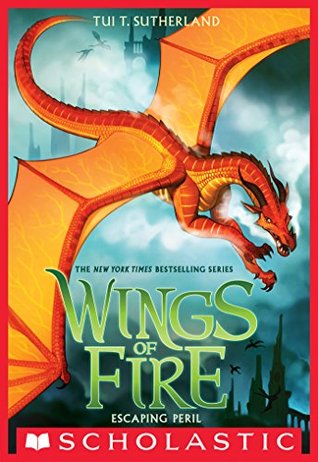
Escaping Peril is the eight book in the series. My daughter and I have read all nine books in the series together and have enjoyed discussing them. She waited for several months for the new book about Peril to arrive. Peril was a character in the first book in the series and my daughter has been fascinated by her ever since. She could hardly wait until book 8 came out. And we were not disappointed. Like the other books, this one took several unexpected twists and turns. If you enjoyed the other books in the series, you will enjoy this one. I would not recommend reading this one until you have read at least the first five. While the book can stand alone, there are so many nuances that will be missed if you have not read the others in the series.
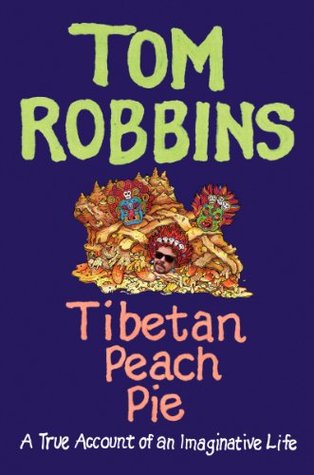 9. Tibetan Peach Pie: A True Account of an Imaginative Life by Tom Robbins
I read three of Tom Robbins novels back in the 1970's and 80's so I found this memoir humorous and engaging. Robbins is a master of the metaphor and the language. I laughed my way through this book and am glad that Robbins wrote it. I listened to it and believe the humor was even stronger because I heard the words spoken. I recommend it to those who love to laugh and who love the work of Tom Robbins.
8. Being Nixon: The Fears and Hopes of an American President by Evan Thomas
 When Richard Nixon lost the 1960 Presidential election to John F. Kennedy, I was eleven years old and barely aware of politics. When Nixon won the 1968 election, I was in Jamaica as a college student and read very little news about the election campaign. Nine months earlier I had been knee deep in politics campaigning for Eugene McCarthy in Wisconsin. I even went Clean for Gene by shaving my beard. 1968 was a troubled year. Martin Luther King was shot in Memphis, TN and Bobby Kennedy was shot in LA. Mayor Richard Daley had his thugs beat up the hippies at the Democratic convention in Chicago. When Nixon resigned from office in August of 1974, I was married and studying for my Master's degree in theatre.
What I did not know until I read this book was that Nixon's actions helped to destroy the economy of the Midwest in the 1970's and 1980's. Nixon was a consummate politician who knew very little of economics. He proceeded to sever the dollar's connection to the gold standard, knowing it would bring about inflation. He also irritated the Arabs with his support of Israel during the 1973 war. This led to retaliation by OPEC and the oil embargo which helped to increase inflation as well.
Evan Thomas, in this excellent biography, is focused on emotional and psychological nature of Nixon. I learned that Nixon was very shy and uncomfortable around people. He avoided confrontation and held grudges against those who had done him wrong. He had an inferiority complex and had a love-hate relationship with those he perceived to be a part of the East Coast establishment, especially the Kennedy clan. Nixon was not very self-aware. He did not like to focus on the past. He preferred to look to the future.
Nixon was very loving and kind with his immediate family — his wife and daughters. He seemed to compartmentalize his life, behaving one way with his family and another in the world of politics. He was driven to succeed at all costs. Like many of us, Nixon had multiple facets to his personality. One minute he could be kind and supportive and the next yelling and cursing. His closest aides learned not to take him seriously when he went on a rampage. They often ignored his commands. Yet, he was very supportive of the underdog. When the Democratic Vice-President candidate, Thomas Eagleton, was forced out the presidential race in 1972 because of his treatment for depression, Nixon wrote a very kind letter to Eagleton's son.
I decided to read this book when I read where Bill Gates recommended it because it was one of the more balanced biographies of Nixon. And while I have not read any other biographies of Nixon, I would highly recommend this one to anyone interested in Nixon and the time period of the 1950's through 1970's. Evan Thomas tells us both the negative and the positive about the life of Nixon.
 7. Eisenhower in War and Peace by Jean Edward Smith
Dwight D. Eisenhower was elected President when I was 3 years old and left office when I was 11. I have read little about Eisenhower until this year. This is the 3rd book that I have read about him this year and is the first full biography.
Eisenhower was born on October 14, 1890 in Denison, Texas, the 3rd of 7 sons born to David and Ida Eisenhower. His father had moved the family from Kansas in 1888 to find work. The Eisenhowers only lived in Texas for 4 years before they moved back to Kansas. Dwight's ancestors originally arrived from Germany in 1741. David's father was a preacher with the River Brethren, an offshoot of the Mennonites. Like the Mennonites, the River Brethren did not believe in fighting in wars.
Religion was a major part of the fabric of Eisenhower family. David would begin the day by reading the Bible to the family. They said prayers before meals and the boys read the scriptures at night. Dwight had read the entire Bible twice before entering West Point.
Dwight's father was a very strict and stern man who did not play with his sons nor take them fishing or hunting. Ike's brother, Edgar, said about their father: "He was an inflexible man with a stern code. Life to him was a very serious proposition and that's the way he lived it, soberly and with due reflection."
Dwight's mother, Ida, had the greatest influence on the boys. She was present in their lives and usually found the humor in most situations. In spite of his pacifist upbringing, Dwight sought and received an appointment to West Point where he was admitted in June of 1911. Eisenhower graduated 61st in a class of 164 and was assigned to San Antonio where he met his future wife, Mary Geneva Doud. They were married on July 1, 1916.
Eisenhower did not have the opportunity to see any action on the battle field during World War I. Between the two wars he held administrative posts in various places. In December of 1926 Dwight was assigned to the American Battle Monuments Commission under John J. Pershing. In December, 1927 he moved to Paris to continue the work under the Monuments Commission where he explored first hand the terrain of France. This experience helped prepare him for the invasion of Europe.
In October 1935, Eisenhower sailed to the Philippines to serve under Douglas MacArthur. MacArthur delegated the day to day operations to Eisenhower and James Ord. MacArthur only came into the office about an hour a day.
In June of 1942, Eisenhower was given the command of the invasion of Europe. His first task was to establish a command structure. Eisenhower initially made some serious mistakes as the army tried to retake northern Africa before entering France. He had never commanded troops in combat and did not do well as a field commander. He was better at overall organization and in public relations. He was skilled in managing the top brass. Eisenhower was name Supreme Commander where he could devote his time to the political and inter-allied problems. Others were given direct field command of the soldiers. Dwight was promoted to a four star general. The invasion of Europe began in June, 1944. Eisenhower made the final decision when to start the attack. Victory in Europe made Eisenhower an international hero.
In 1952, Ike Eisenhower won the Republican nomination for President against Adlai Stevenson, the Democratic nominee. The 1952 campaign has been called one of nastiest on record at the time. There were bogus claims about a Communist conspiracy in the Truman administration and the GOP launched a negative campaign questioning the sexual orientation of Governor Stevenson. More than 61 million Americans voted and Ike won 55% of the popular vote. He won 442 electoral votes to Stevenson's 89.
Eisenhower served as President during eight years of peace and prosperity. When he left office in 1961, his popularity ratings were as high as when he was inaugurated.
This is an excellent biography by Jean Edward Smith. The book gains momentum with the discussion of Eisenhower's activities during World War II and his accomplishments and failures during his Presidency. I highly recommend this book to anyone interested in learning more about the life of Dwight D. Eisenhower.
 6. Dragon Seed: The Story of China at War by Pearl S. Buck
This is a brilliant anti-war novel seen through the eyes of a Chinese family of farmers. Buck writes of the invasion of China in 1937 by the Japanese. This is a novel that everyone should read.
 5. Slaughterhouse-Five: The Childrens Crusade, a Duty Dance with Death by Kurt Vonnegut
I have been a fan of the work of Kurt Vonnegut for over 40 years. My favorite book of his is Cat's Cradle. I also heard Vonnegut speak in the 1980s while I was living in the Indianapolis area. I read Slaughterhouse-Five while in college shortly after it came out. I don't remember that the book impressed me that much at the time. And now I understand why: the book is not a linear narrative. It jumps back and forth in time as well as place. It involves space travel, war and eye glasses. While I loved science fiction, this did not seem like science fiction.
So, all these years later, I decided to listen to Slaughterhouse-Five and loved it. The voice of Ethan Hawke set the tone for the book and allowed me to better appreciate the non-linear narrative. I highly recommend this book to everyone. Sometimes listening to a story is even better than reading it.
4. Shoeless Joe by W.P. Kinsella

I read the Iowa Baseball Confederacy by Kinsella back in the 1980s, but never read Shoeless Joe. I have, though, watched Field of Dreams on multiple occasions. I usually don't like to read books after I have seen the movie, but decided to give this one a try. I found myself initially visualizing the characters in the image of the actors in the movie, but it was not a hindrance since I love the movie. All the major movie scenes are in the book, but a couple of characters in the book were cut from the movie — Ray's twin brother and Eddie Sessions, the farmer who sold the farm to Ray. Also the movie changed the character of J.D. Salinger to Terrence Mann.
The book at its core is about the nature of obsession and how people pursue their dreams against all odds. The book and movie are both motivational and inspiring.
I discovered after reading the book that W.P. Kinsella was Canadian. He did earn a Masters from the Iowa Writers Workshop. I recommend the book to all lovers of dreams and baseball.
3. Middle Age: A Romance by Joyce Carol Oates

Joyce Carol Oates, a master novelist, is one of the most prolific writers of her generation. This is the second of her novels that I have read. Both novels start with an event — in this case the death of a neighbor and friend — and follow the impact on various people. The event triggers in each character an opportunity to re-evaluate his or her life. Some are more successful at this then others. This is a book worth reading by one of the great American novelists. Don't let the insipid title get in the way of picking up this book. There is more nuance and depth to this book then the title will lead you to believe.
2. The Girl Who Wrote in Silk by Kelli Estes

The Girl Who Wrote in Silk is a brilliant novel by Kelli Estes. Set simultaneously in the 1880s and present day, Estes tells the tragic historical story of how the Chinese were driven out of northwest Washington by white men. The heart of the novel is the story of Mei Lien and her family who are forced out of their home in Seattle onto a ship that is bound for China back in the 1880's. Mei Lien discovers that the Chinese are not being taken to China, but that the plan is to throw them overboard when the ship is far enough from shore. When she tells her father, he makes the decision that she needs to jump overboard while there is still opportunity for her to swim to shore. Mei Lien is rescued by a white man who ultimately becomes her husband. Mei Lien's tale is the story of racism and the anti-Chinese hysteria that ran through the villages and towns on the west coast of Washington before it became a state.
Wrapped around Mei Lien's story is the story of present day Inara who discovers an embroidered sleeve and attempts to find out its historical importance.
The message of the story is very relevant today amidst the current immigration and anti-Muslim hysteria that has overtaken many people in this country. This is book is a must read for everyone who cares about people.
This novel is Kelli Estes' first published novel and has been fourteen years in the making. Estes writes: "In the fourteen years between quitting that job and selling this novel, I wrote six manuscripts, attended countless writing workshops and conferences, and raised two boys who are now in school all day, which allows me to focus on writing."
I highly recommend that everyone read this novel for a better understanding of a tragic time in American history and the pain that racism causes. Racism touches everyone and is not just about blacks and whites, but is also about Asians, Hispanics and anyone who does not fit the perceived norm.
 1. The Sacrifice: A Novel by Joyce Carol Oates Another fantastic novel by Joyce Carol Oates. She has the ability to create a realistic fictional world that feels right out of the pages of life. I would highly recommend that you listen to the reading of this story by multiple actors. This book provides a serious look at racism in America through fiction. Everyone should read this book.